Chasing the Invisiblized Heritage. Contemporary Photographers in search of Afro-Argentinian Identities
Katarzyna Cytlak
This text examines the historical and contemporary invisibilization of Afro-Argentinians within Argentina’s national narrative and visual culture. While Afro-descendant heritage in countries such as Brazil or Uruguay remains marginalized yet acknowledged, in Argentina it has often been denied altogether. Drawing on the concept of the “coloniality of power” developed by Aníbal Quijano, the study analyzes how colonial structures of knowledge and racial hierarchy persisted in modern Argentina, contributing to a symbolic process of blanqueamiento (whitening) that framed the nation as culturally and racially European. This ideological framework marginalized Afro-Argentinian presence in cultural institutions and representations, despite their significant contributions to Argentine culture and the arts. The article also examines how Afro-descendant subjects have historically been depicted in visual culture as anonymous, exoticized figures, reinforcing what Achille Mbembe describes as the construction of Blackness as a “savage exteriority.”
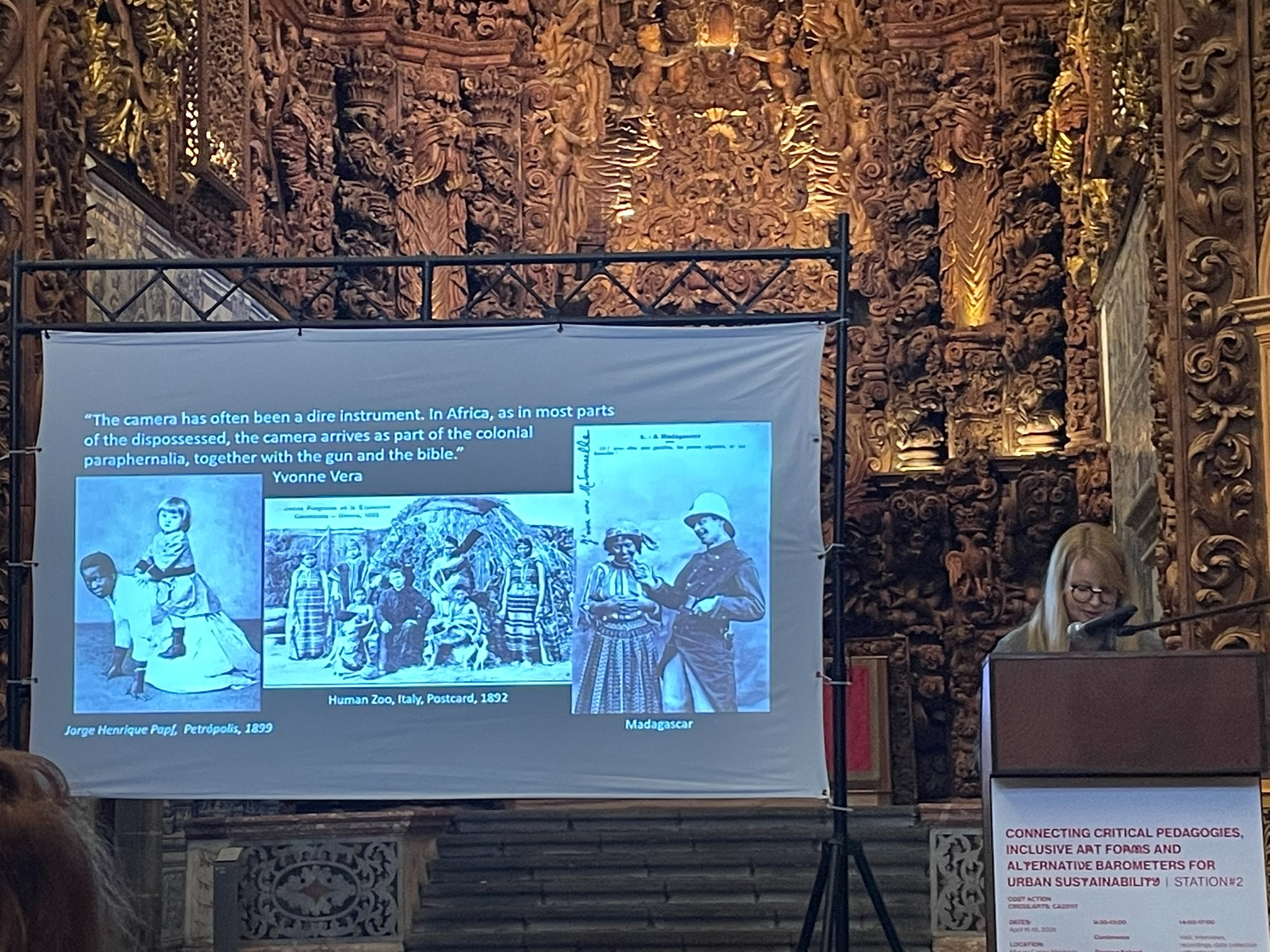
In contrast, the contemporary photographic project Afroporteños (2015) by Nicolás Parodi, developed in collaboration with the DIAFAR association, is analyzed as a decolonizing visual practice. Through archival materials, family photographs, and contemporary portraits, the project challenges dominant visual narratives by foregrounding Afro-Argentinian identity as present, active, and politically conscious. By reclaiming photography—once a colonial instrument of classification and control—Parodi’s work makes visible a community historically rendered invisible and reasserts its place within Argentina’s social and cultural present.
Image from the presentation the Azores Station.