Prof. Slavica Janešlieva, PhD, MFA
Ss. Cyril and Methodius University in Skopje, North Macedonia
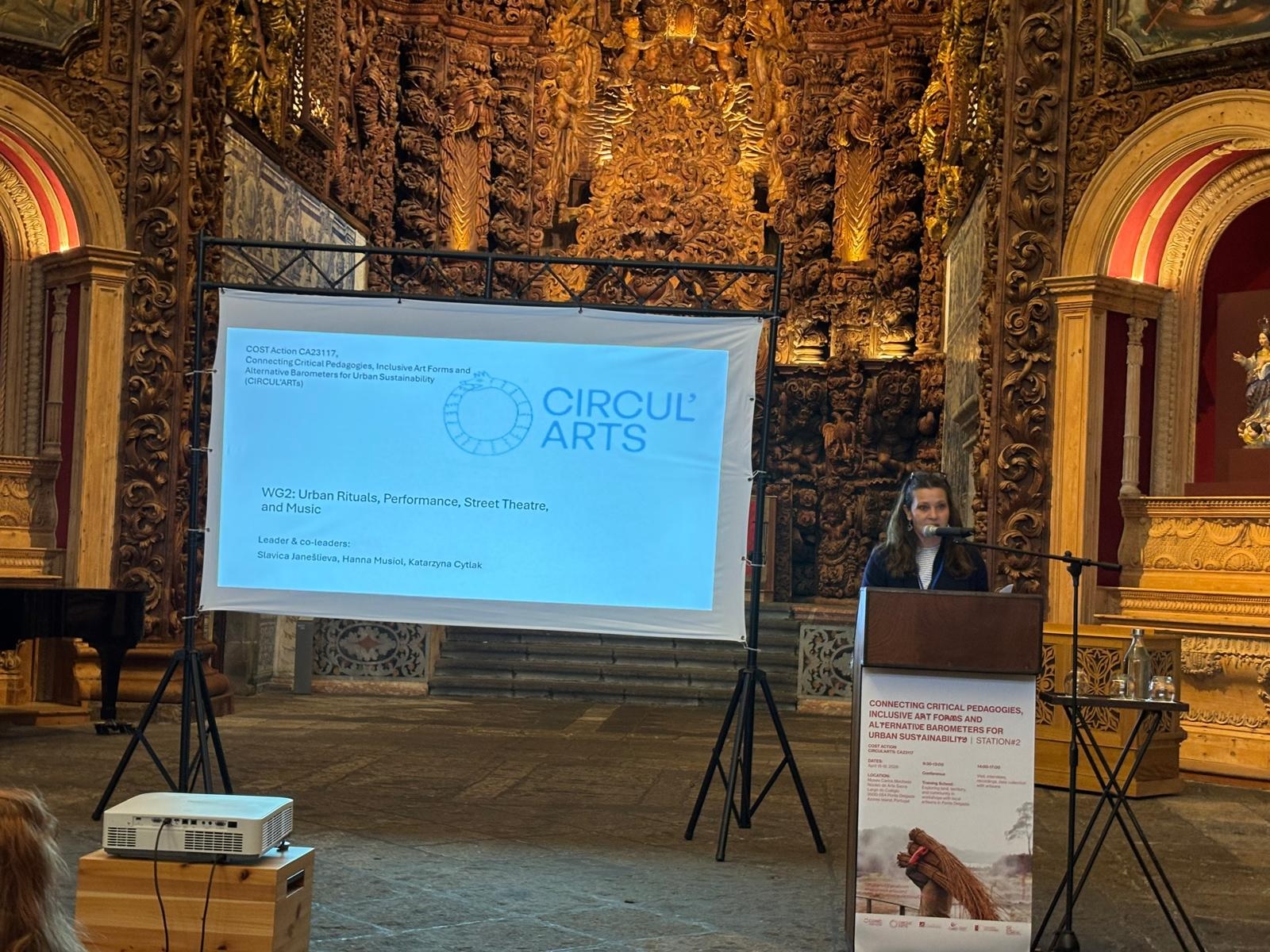
Deepening the dialogue between research and artistic practice - WG2: Urban Rituals, Performance, Street Theatre, and Music
(Leader & co-leaders: Slavica Janešlieva, Hanna Musiol, Katarzyna Cytlak)
WG2 investigates how artistic and performative practices contribute to inclusive and sustainable urban transformation. Focusing on urban rituals, street theatre, and music. The group examines how collective and embodied forms of expression foster social connection, community participation, and environmental awareness, using dialogue and creativity as instruments for sustainable change in cities.
WG2’s work bridges research and artistic practice, exploring rituals as acts of community building, performances as spatial interventions, and music as a vehicle of shared memory and identity. Through case studies, collaborative projects and a planned workshop in 2027, the group underscores that sustainability is not merely a technical or economic challenge, but a cultural and social process driven by imagination, participation, and the arts.
Objectives of WG2
1. Deepening the dialogue between research and artistic practice
A key objective for WG2 is to further bridge the gap between theoretical inquiry and artistic experimentation. Rather than treating art as illustrative, the group can continue to position performative and creative practices as forms of knowledge production in their own right. Initiatives such as collaborative workshops, residencies, and possibility for 2027 in-person meeting offer valuable opportunities to explore how researchers and artists can co-create insights into urban transformation.
2. Expanding transnational and community-engaged collaborations
Given the group’s wide geographical reach, there is strong potential to develop interconnected case studies that engage local communities across different urban contexts. Building on existing projects—such as those focused on urban memory, soundscapes, and performative interventions—WG2 can foster comparative perspectives that highlight both shared challenges and locally grounded practices of sustainability and inclusion.
3. Consolidating collective outputs and shared visibility
Another important step is to strengthen WG2’s collective voice through joint publications, collaborative outputs and possibly of the shared digital platform. Documenting artistic and performative practices—alongside their social and spatial impacts—can help articulate the group’s contribution to understanding sustainability as a cultural and participatory process, while also supporting emerging researchers within the network.
Amadea Kovi
YR - post doc researcher
Universidade Catolica Portuguesa, Portugal
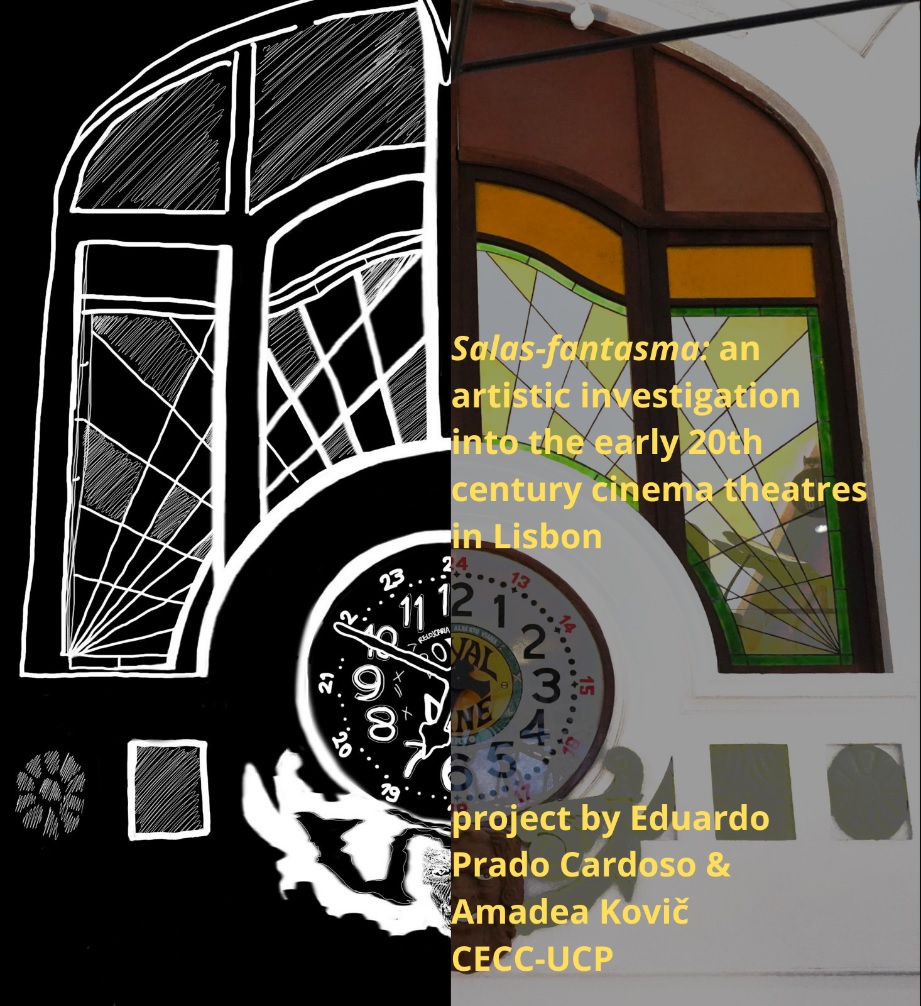
Salas-fantasma: an artistic investigation into the early 20th century cinema theatres in Lisbon
Abstract
Salas-fantasma is an ongoing interdisciplinary research project and an artistic investigation, focused on visual aesthetic elements connecting three of Lisbon’s former cinema theatres with their cinematic history from the early 20th century: Pathé/Imperial (1925), Cine Royal (1929) and Animatógrafo do Rossio (1907).
Each of these buildings, located in a different historically significant neighbourhood of Lisbon, is in the present moment no longer engaged by a cinematic function. Nonetheless, their history remains visible through visual signs, such as a clock on the wall carrying the former cinema’s name, faded and cracked facade where a sign used to hang, or elaborate door frame designs.
Building on the theoretical framework of speculative aesthetics, this ongoing investigation takes these visual and aesthetic elements as a point of departure for a methodological approach engaged in a dialogue between artistic and documentative practices of photography and drawing, opening up potential for speculative, alternative and imaginative possibilities of engaging with archive, memory, history and heritage.
Image 2: Title (photo: xxxxxxxxxxxx)
Rūta Mažeikienė
assoc. prof. dr.
Vytautas Magnus University, Kaunas, Lithuania
Contemporary Carnival as a Participatory Urban Ritual: The Case of the Fluxus Festival in Kaunas
Abstract
Carnival as a cultural phenomenon has existed for centuries in both European and non-European contexts. Over time, it has evolved into a wide range of forms: from folk celebrations in rural areas to parades in major cities; from commercially driven mass events to community-based, grassroots initiatives; and from festivals rooted in cultural heritage to newly initiated contemporary urban events. In recent years, carnival has been reinterpreted not only as a popular or heritage-based event attracting tourists and local residents, but also as a socially engaged participatory art practice that fosters creativity, community engagement, and the reimagining of public space.
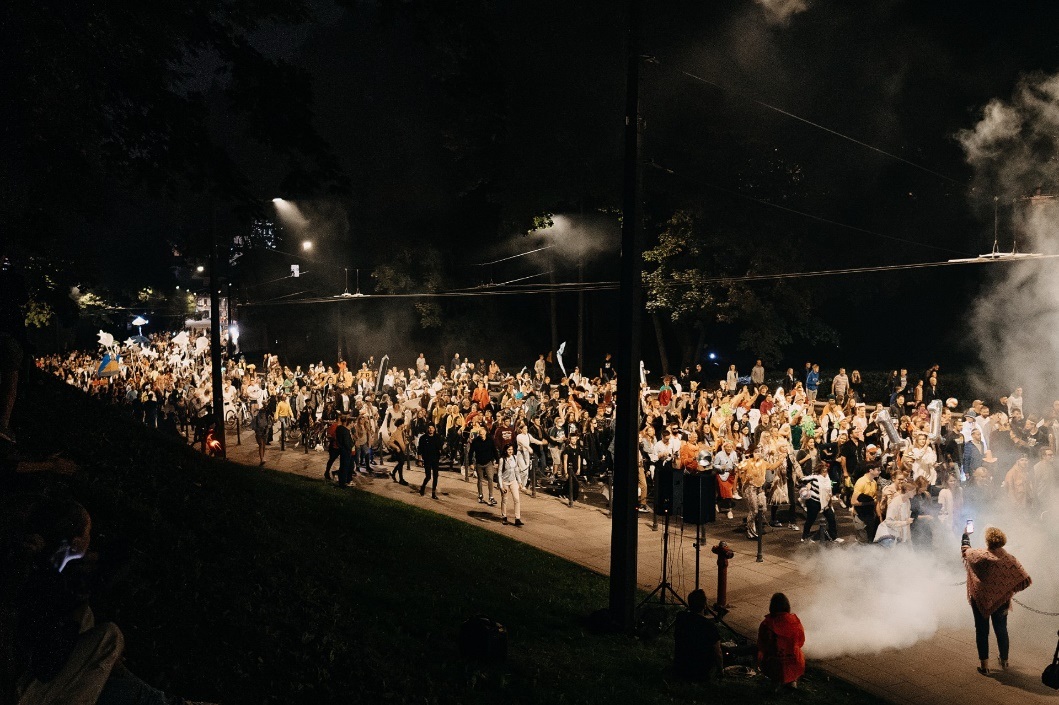
This presentation examines the contemporary urban carnival through the case of the Fluxus Festival in Kaunas. Initiated in 2018, the Fluxus Festival has grown into an annual community-based event inspired by the principles of the Fluxus movement, emphasizing playfulness, openness, co-creation, and the idea that everyone can be a creator. Its central element – the Fluxus Carnival procession – temporarily transforms a city street into a participatory, performative, and inclusive public space.
Drawing on theories of participatory art, the research shows that the Fluxus Festival functions as an effective participatory artistic practice that fosters a shared sense of belonging to the city. By ritualising collective creativity and transforming everyday urban space through performative action, contemporary carnival appears not only as entertainment but also as a socially transformative cultural practice with potential to promote community engagement, strengthen local identity, and create alternative experiences of public space.
Image 3: Fluxus Festival in Kaunas, 11 September 2021 (photo: Martynas Plepys. Courtesy of Kaunas Artists’ House)
Prof. Dr. Burak Bal
Prof. Dr. Burak Bal
Abdullah Gül University, Turkey
Acoustic phonon drag in metals
Abstract:
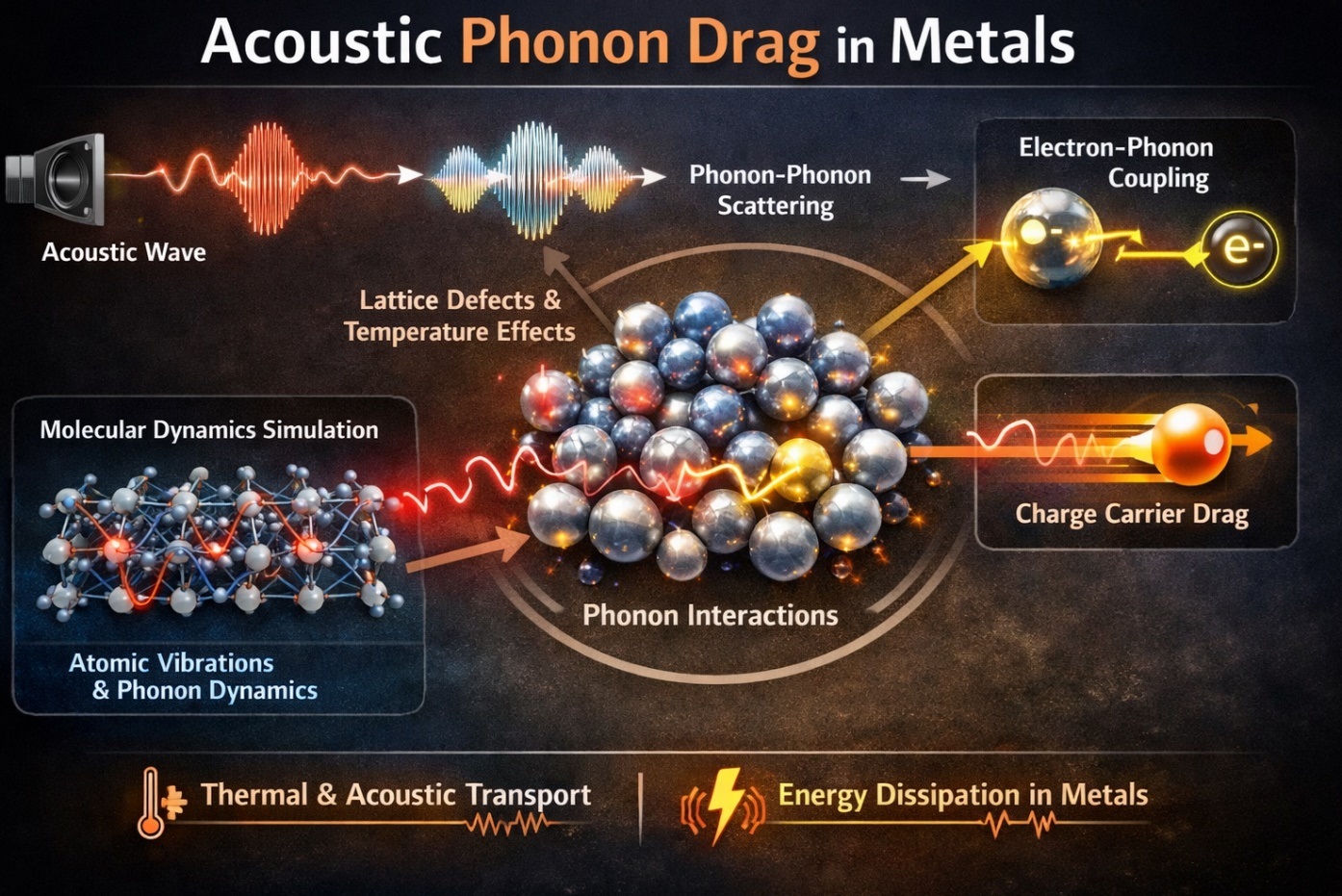
Acoustic phonon drag in metals arises from momentum transfer between charge carriers and lattice vibrations, significantly influencing thermoelectric and acoustic transport properties at low and intermediate temperatures. In metallic systems, sound propagation is governed by collective atomic motion, where acoustic phonons act as the primary carriers of mechanical energy. Interactions between electrons, atoms, and phonons lead to complex phonon-phonon scattering processes that modify thermal conductivity, electrical resistivity, and acoustic attenuation.
This work examines acoustic phonon drag using a molecular dynamics simulations to model atomic-scale lattice behavior. Molecular dynamics enables direct observation of atomic vibrations, phonon dispersion, and anharmonic phonon-phonon interactions, providing insight into how microscopic forces influence macroscopic acoustic properties. Special attention is given to the role of lattice defects, temperature, and interatomic potentials.
Image 4: Slide from the presentation (photo: xxxxxxxxx)
Mirela Imsirovic
Dr. sc.
University of Sarajevo, Bosnia and Herzegovina
Mediated texts and the sensitization of public perception on migration
Abstract:
This presentation explores how texts circulated in traditional and digital media news articles, opinion pieces, editorials, and social media narratives mediate public understanding and affective responses toward migration and migrant communities. It conceptualizes media texts not merely as information carriers but as affective instruments that shape emotions, ethical engagement, and social imaginaries in urban audiences. Drawing on critical media studies and affect theory, the contribution examines how linguistic choices, framing strategies, and narrative structures influence public perception, generating empathy, fear, or indifference. By analyzing the circulation and reception of migration-related texts, the study highlights how media can function as informal pedagogical tools, sensitizing audiences to questions of inclusion, displacement, and social justice.
The presentation situates these dynamics within the objectives of CIRCUL’ARTs, arguing that mediated texts operate as alternative barometers of urban sustainability and social cohesion. They reveal how public sentiment toward migrants is constructed, negotiated, and potentially transformed through textual mediation, offering insights into the role of media in shaping inclusive and responsive urban communities.
Image 5: Public Perception of AI Risks vs. Reality: How Media Coverage Shapes Our Fears and Concerns (photo: David Berg. Accessed: 03.02.2026. Available at the link: https://www.linkedin.com/pulse/public-perception-ai-risks-vs-reality-how-media-coverage-david-berg-ttb6c/. )
Katarzyna Cytlak, PhD
Chasing the Invisiblized Heritage. Contemporary Photographers in search of Afro-Argentinian Identities.
Abstract
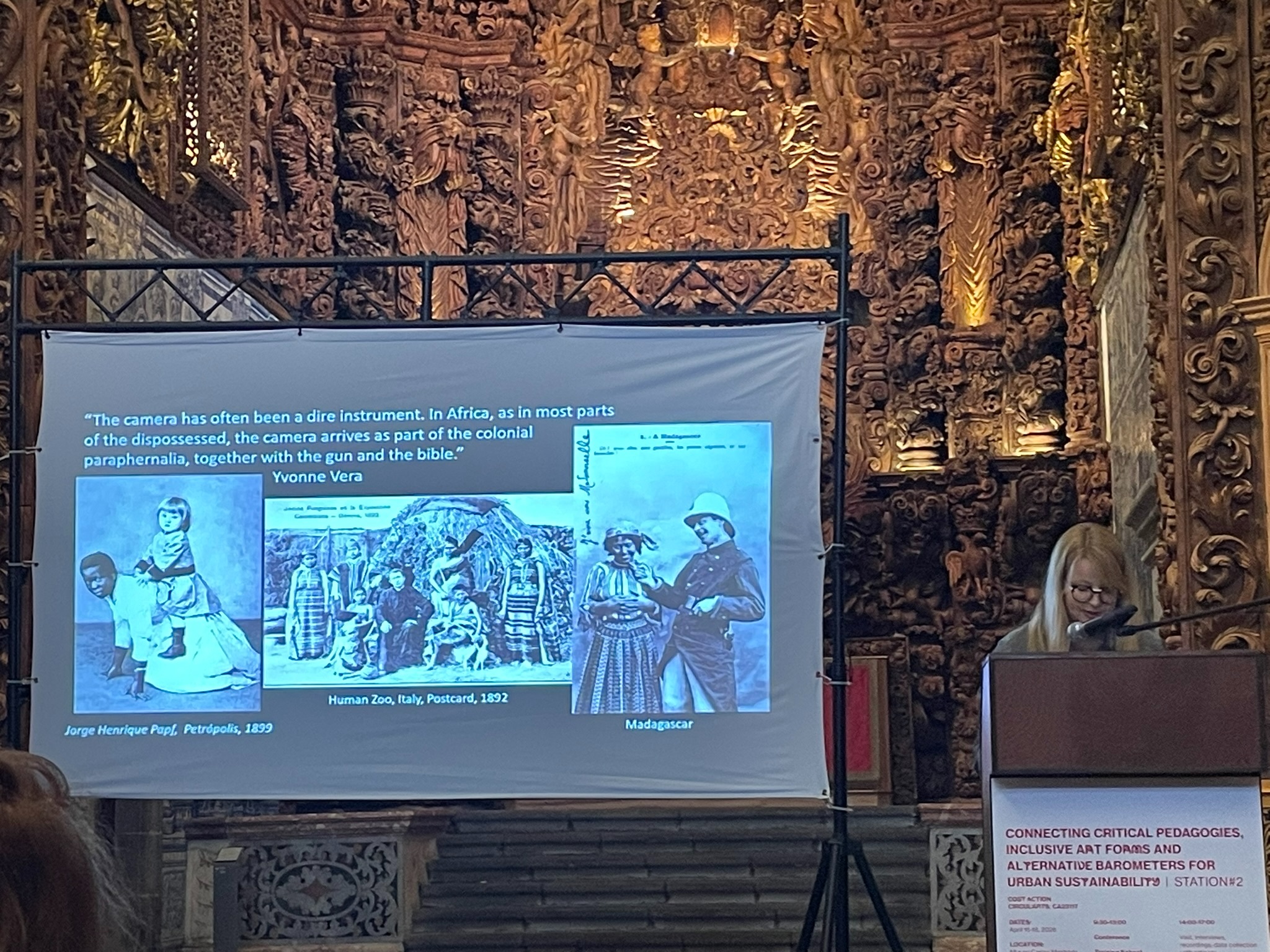
This text examines the historical and contemporary invisibilization of Afro-Argentinians within Argentina’s national narrative and visual culture. While Afro-descendant heritage in countries such as Brazil or Uruguay remains marginalized yet acknowledged, in Argentina it has often been denied altogether. Drawing on the concept of the “coloniality of power” developed by Aníbal Quijano, the study analyzes how colonial structures of knowledge and racial hierarchy persisted in modern Argentina, contributing to a symbolic process of blanqueamiento (whitening) that framed the nation as culturally and racially European. This ideological framework marginalized Afro-Argentinian presence in cultural institutions and representations, despite their significant contributions to Argentine culture and the arts. The article also examines how Afro-descendant subjects have historically been depicted in visual culture as anonymous, exoticized figures, reinforcing what Achille Mbembe describes as the construction of Blackness as a “savage exteriority.”
In contrast, the contemporary photographic project Afroporteños (2015) by Nicolás Parodi, developed in collaboration with the DIAFAR association, is analyzed as a decolonizing visual practice. Through archival materials, family photographs, and contemporary portraits, the project challenges dominant visual narratives by foregrounding Afro-Argentinian identity as present, active, and politically conscious. By reclaiming photography—once a colonial instrument of classification and control—Parodi’s work makes visible a community historically rendered invisible and reasserts its place within Argentina’s social and cultural present.
Image 6: Image from the presentation the Azores Station. (photo: xxxxxxxxx)